



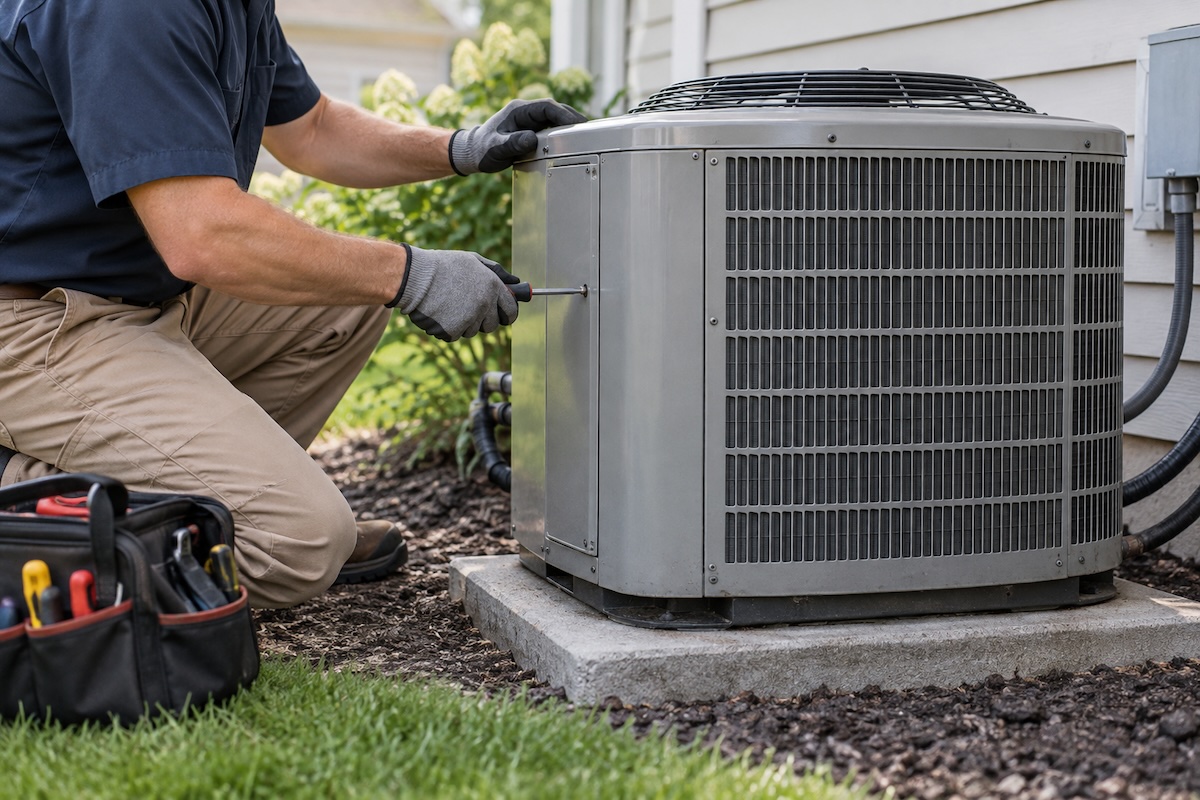
Have your air conditioner serviced once a year before summer, and your furnace or boiler serviced once a year before winter. For a home with separate heating and cooling equipment, that usually means two appointments: one in spring and one in fall. For heat pumps, which can provide both heating and cooling, follow the manufacturer’s service schedule. Ductless systems also have model-specific care instructions.
For homeowners in Novi and Metro Detroit, this schedule puts maintenance ahead of the seasons when dependable heating and cooling matter most. Between visits, filter care and a few simple checks help keep the equipment working properly.
How Often Does Each Type of HVAC System Need Service?
The schedule depends on what heats and cools your home. Use this table as a starting point, then check the equipment’s instructions.
| Equipment | Professional service schedule | When to arrange it |
|---|---|---|
| Central air conditioner | Once a year | Spring, before regular summer use |
| Furnace | Once a year | Fall, before the heating season |
| Residential boiler | Once a year, following the equipment’s instructions | Before the heating season |
| Separate furnace and AC | Each unit once a year | Commonly through spring and fall visits |
| Heat pump | Follow the manufacturer’s interval and account for use in both seasons | Ask your technician to plan checks around your heating and cooling needs |
| Ductless mini-split (indoor units without air ducts) | Follow the model’s service instructions | Timing depends on whether it provides cooling only or both heating and cooling |
ENERGY STAR recommends annual checks before the heating and cooling seasons. Booking ahead also helps you avoid waiting until contractors are busy responding to summer or winter breakdowns.
If you own a furnace and AC, a spring AC appointment does not necessarily include a complete furnace inspection. Ask which equipment the visit covers. You can arrange air conditioning maintenance before summer and plan heating service for fall.
Missed the ideal season? Book the overdue visit when you can. You do not need to wait until the following year.
When Might Your System Need More Attention?
Your equipment’s condition matters alongside the calendar. Tell your technician about changes in how you use the system, recent renovations, or problems since the last visit.
Heavy use: Equipment that heats and cools a home throughout the year needs a schedule that accounts for both jobs. Ask whether its operating hours call for additional checks.
Dust and pets: Filters may need attention more often in a dusty home or one with shedding pets. That does not automatically mean you need more paid service visits. Check the filter’s condition and follow its care instructions.
Unknown maintenance history: If you recently bought the home and cannot find service records, arrange an inspection. Give the technician any equipment manuals, installation paperwork, or repair receipts the previous owner left behind.
Repeated problems: Frequent shutdowns or recurring leaks need a diagnosis. Booking another routine tune-up alone may not address the cause.
What Happens If You Don’t Service Your HVAC System?
Skipping one appointment does not guarantee a breakdown. The concern is that dirt, wear, and developing faults can go unnoticed for longer.
Energy Use Can Increase
Dirty coils, the surfaces that transfer heat, can make cooling less effective. Restricted airflow can also reduce performance. The equipment may run longer to reach the temperature you set.
A higher bill alone does not prove the system needs repair. Compare energy use as well as cost, and consider weather changes, utility rates, and thermostat settings.
Your Home May Become Less Comfortable
You may notice weaker airflow or rooms that take longer to warm up or cool down. A service visit can help identify whether the equipment needs cleaning, adjustment, or repair.
Tell the technician where and when the problem occurs. “The upstairs stays warm every afternoon” is more useful than “the AC doesn’t work well.” Uneven temperatures can also involve insulation, air leaks, or the home’s air ducts.
Small Problems Can Become Larger Repairs
An inspection creates a chance to spot loose connections, worn components, or leaks before they cause further trouble. Some issues remain minor; others worsen with continued use.
Ask the technician to explain what they found, how urgent it is, and what could happen if you postpone the repair. Request a written price before authorizing work beyond the maintenance visit.
Water Can Damage Nearby Surfaces
Air conditioners remove moisture from indoor air. That water collects in a tray and drains away. If the drain becomes blocked, water may back up and damage nearby flooring, walls, or ceilings.
Report water around indoor heating or cooling equipment promptly. A technician should identify the source rather than assume every puddle comes from the same problem.
Equipment May Wear Out Sooner
Problems that increase strain or reduce cooling performance can shorten equipment life. Maintenance helps address avoidable problems, but it cannot promise a specific number of extra years.
If replacement comes up, ask what condition or fault supports that recommendation. Compare the proposed repair with replacement options using the equipment’s condition, repair history, and your plans for the home.
Heating Safety Problems May Go Unnoticed
Fuel-burning furnaces and boilers need checks for safe operation, including the path that carries exhaust outdoors. A malfunction can create a carbon monoxide risk. This gas has no smell or color.
The U.S. Consumer Product Safety Commission recommends annual professional heating inspections and working carbon monoxide alarms. Install and maintain alarms according to their instructions. An alarm complements maintenance; it does not replace it.
All-electric heating equipment does not burn fuel, although other appliances or an attached garage can still create carbon monoxide risks in a home.
What Should a Professional Maintenance Visit Include?
A useful visit checks how the equipment operates and identifies work it needs. The exact tasks vary by system, so request the checklist when booking.
Typical areas include:
- Thermostat operation and temperature settings.
- Electrical connections and operating controls.
- Filters, fans, and airflow where applicable.
- Cooling surfaces and water drainage.
- Signs of leaks or component wear.
- Heating operation and exhaust safety for fuel-burning equipment.
A boiler requires different checks from a furnace that blows warm air through ducts. Similarly, a heat pump needs checks suited to its heating and cooling functions.
Ask whether the price includes cleaning, replacement filters, or only inspection and testing. At the end, request a record of the work completed, any concerns, and the recommended next service date.
What Can You Do Between Service Visits?
You can handle basic care without opening internal equipment compartments.
Check filters monthly. Replace disposable filters or clean reusable ones according to their instructions and condition. Some filters last longer than others, so a single replacement schedule will not suit every home. Use the size and type approved for your equipment.
Keep vents clear. Move furniture, rugs, and curtains away from the vents that deliver air to rooms and draw it back into the system.
Check the outdoor area. Keep leaves and other loose debris from collecting around the outdoor unit. Follow the manufacturer’s clearance instructions for nearby plants and objects. If a heat pump becomes encased in ice, call for advice rather than chipping at the equipment.
Keep a simple service record. Note the date, work completed, filter changes, and any new sounds or performance problems. This makes the next visit more useful.
Leave internal electrical work, fuel-system adjustments, and cooling-system repairs to qualified technicians. Duct cleaning is a separate service; it does not automatically belong in every annual maintenance visit.
Which Signs Mean You Should Call Before the Next Tune-Up?
Contact a technician if you notice:
- The system repeatedly starts and stops within short periods.
- Airflow becomes noticeably weaker.
- The home no longer reaches the set temperature under conditions it previously handled.
- New grinding, banging, or squealing sounds develop.
- Water leaks around indoor equipment.
- Ice remains on cooling equipment or keeps returning.
These symptoms can have several causes. Describe what you see, when it started, and whether it affects heating, cooling, or both. Dan Wood’s heating service team can help with furnace and boiler concerns.
A gas smell, smoke, or a carbon monoxide alarm needs immediate action. Leave the building and call 911 from a safe location outside. For a suspected gas leak, avoid operating switches or using a phone inside. Do not return until emergency responders say it is safe. These situations should not wait for an online appointment request.
What If You Haven’t Serviced Your System in Years?
Start by booking an inspection and explaining that you do not know when the last service took place. Share any symptoms, even if the equipment still heats or cools.
Ask the technician to separate their findings into three groups:
- Routine cleaning and maintenance.
- Repairs needed for safe or proper operation.
- Optional improvements you can consider later.
This helps you understand the priorities and budget for the work. A gap in maintenance records alone does not establish that you need new equipment. The recommendation should depend on what the inspection finds.
Is a Residential Maintenance Contract Worth It?
A maintenance contract may help you organize ongoing care, but its value depends on what it includes and which equipment you own.
Before signing, ask:
- Does it cover both heating and cooling equipment?
- How many visits are included, and what happens during each?
- Are cleaning, filters, and replacement parts included or charged separately?
- What does it cost compared with booking those services individually?
- What are the renewal and cancellation terms?
Dan Wood offers residential maintenance contracts. Ask our team about the current coverage and terms so you can compare them with your household’s needs.
Keep your service records and the equipment’s warranty paperwork together. If you have questions about maintenance requirements, check the written warranty for your model.
Frequently Asked Questions
Does a New HVAC System Still Need Maintenance?
Yes. New equipment still needs the care described in its owner’s manual. Ask the installer when to arrange the first professional visit and which tasks you should handle between appointments.
Is Changing the Air Filter Enough?
No. Filter care is one part of maintenance. It does not check electrical components, drainage, heating safety, or the system’s overall operation.
Can the Furnace and AC Be Serviced in One Appointment?
Some work can be combined. However, outdoor conditions and the equipment’s instructions may limit which operating tests a technician can complete. Ask what the combined visit covers and whether a seasonal follow-up is needed.
How Much Does an HVAC Tune-Up Cost?
The price depends on the equipment, number of units, access, and work included. Request an itemized quote and ask whether cleaning and filters are included. Repairs and replacement parts may carry separate charges.
Schedule HVAC Maintenance With Dan Wood Services
At Dan Wood Plumbing, Heating, Cooling & Electrical, we help homeowners in Novi and Metro Detroit care for their heating and cooling equipment. Our family-owned company has served the area since 1957, and our team handles maintenance and repairs for furnaces, boilers, air conditioners, and heat pumps.
Whether your next seasonal check is due or you cannot remember the last service visit, we can help you arrange the right appointment. Tell us which equipment you have and what you have noticed so we can understand your concerns.
Call (248) 348-4242 or request an HVAC maintenance appointment. Our team will follow up to discuss your service needs and scheduling.