


Choosing the right type of plumbing for your home is a critical decision that impacts not only your comfort and convenience but also your long-term costs and home value.
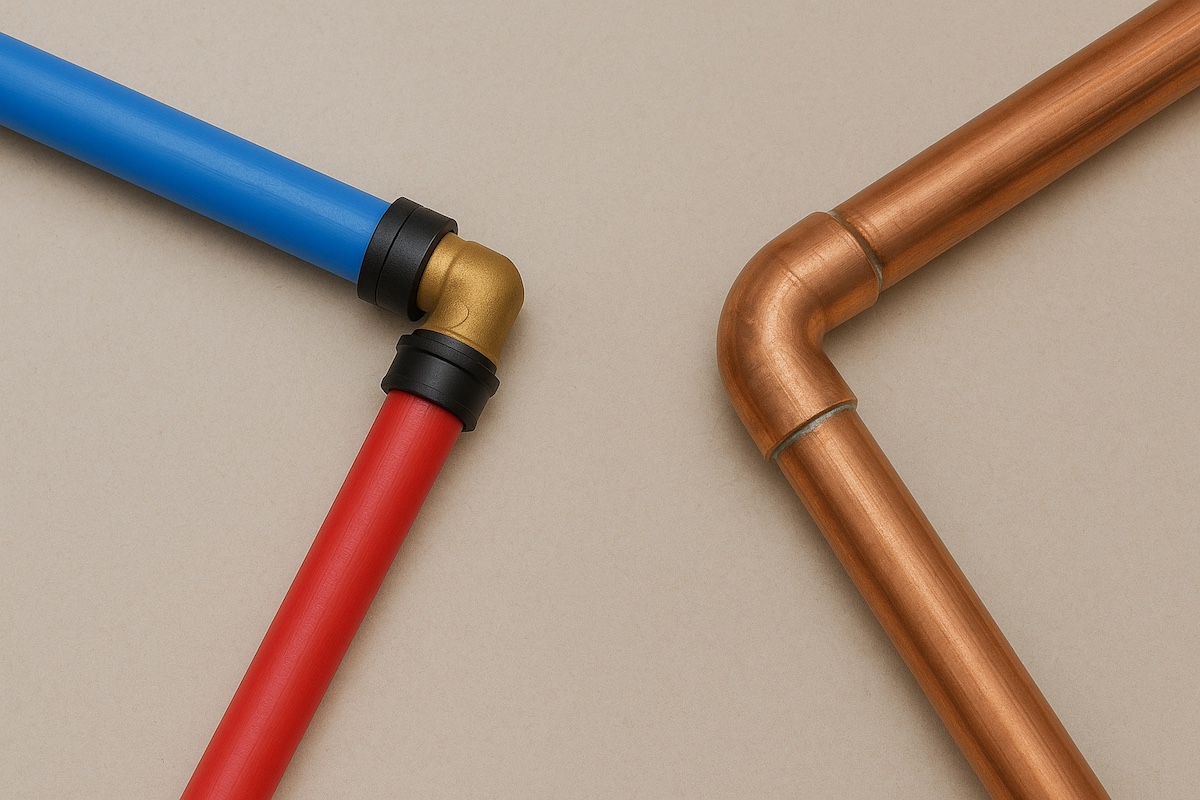
Among the most popular options for residential plumbing are PEX (cross-linked polyethylene) and copper. Each material comes with unique advantages and limitations, and understanding these differences can help you make the best choice for your home.
In this guide, we’ll explore how PEX and copper plumbing systems compare across several key factors such as cost, durability, installation ease, and safety.
Quick Overview: PEX vs. Copper Plumbing
PEX is usually the better choice for homeowners seeking affordable, flexible, and freeze-resistant plumbing. Copper costs more but offers a longer service life, UV resistance, and a proven record of reliability.
- Best for affordability: PEX
- Best for easier installation: PEX
- Best for cold Michigan winters: PEX, although no pipe is freeze-proof
- Best for longevity: Copper
- Best for exposed or outdoor pipes: Copper
- Best overall: PEX for most indoor residential projects; copper when maximum durability or UV resistance is the priority
The right option ultimately depends on your budget, water quality, home layout, and installation location.
What Is PEX Plumbing?
Definition and Composition
PEX stands for cross-linked polyethylene, a type of flexible plastic tubing that has become increasingly popular for both new homes and repiping projects. PEX tubing is available in three forms: PEX-A, PEX-B, and PEX-C which refer to different manufacturing methods, with PEX-A being the most flexible.
How PEX Plumbing Works
PEX plumbing systems use crimp rings, clamps, or push-fit connectors to create watertight seals. Its flexibility allows it to snake through walls and around corners, which greatly reduces the need for fittings and connections. This makes PEX ideal for retrofitting older homes and installing in tight spaces.
What Is Copper Plumbing?
Definition and Types
Copper plumbing has been used for over 60 years and is known for its durability and reliability. Copper pipes come in three main types:
- Type K: Thickest and most durable, usually used underground
- Type L: Common for residential plumbing
- Type M: Thinner and less expensive, typically used for indoor water systems
How Copper Plumbing Works
Copper plumbing requires cutting, cleaning, and soldering the pipes to join them together. It’s a more labor-intensive process, but the result is a very sturdy and long-lasting system that resists UV damage and bacterial growth.
Is PEX Better Than Copper?
PEX is often the better choice for modern residential plumbing because it costs less, installs faster, resists corrosion, and performs well in Michigan’s freezing temperatures. Its flexibility also makes it ideal for repiping older homes because plumbers can route it through tight spaces with fewer fittings.
However, copper may be better for exposed pipes, outdoor applications, or homeowners who prioritize maximum longevity and recyclability. Ultimately, the right choice depends on your budget, water quality, home layout, and where the pipes will be installed. For many indoor plumbing upgrades, PEX offers the best balance of affordability, durability, and performance.
Key Differences Between PEX and Copper Plumbing
Cost
PEX: More affordable in both material and labor. It typically costs 30-40% less than copper.
Copper: Expensive due to raw material costs and the labor-intensive installation process.
Installation
PEX: Easier and quicker to install. Its flexibility means fewer fittings and no need for torch work.
Copper: Requires skilled labor, more time, and precision soldering. It’s less suited for DIY projects.
Durability and Longevity
PEX: Generally lasts 40–50 years. Resistant to corrosion and scaling but susceptible to UV light and rodents.
Copper: Can last over 70 years. Resistant to UV light and bacterial growth, but can corrode in acidic water conditions.
Water Quality and Safety
PEX: Some types may cause a slight taste or odor in water, especially when new. Ensure it’s NSF-certified for potable water.
Copper: Offers clean-tasting water, but if the water is too acidic, it may leach copper over time.
Noise and Pressure Performance
PEX: Quieter—reduces water hammer and pipe noise.
Copper: Rigid pipes can cause more noise, especially at high pressure.
Environmental Impact
PEX: Not recyclable, but it uses less energy to produce.
Copper: 100% recyclable and sustainable, but requires more energy for extraction and processing.
Pros and Cons of PEX Plumbing
Advantages
- Lower cost
- Easier to install, especially in tight spaces
- Resistant to scale and chlorine
- Excellent freeze resistance
Disadvantages
- Can’t be used outdoors (damaged by UV)
- Potential for chemical leaching (though rare in certified PEX)
- Vulnerable to rodent damage
Pros and Cons of Copper Plumbing
Advantages
- Long track record of reliability
- Withstands extreme temperatures and UV rays
- Antimicrobial properties help maintain water quality
- Fully recyclable
Disadvantages
- High material and labor costs
- Corrosion risk in acidic water
- Prone to theft in certain areas due to resale value
Which Plumbing Option Is Right for Your Home?
Choosing between PEX and copper depends on your unique situation. Here are a few things to consider:
Climate
PEX performs better in freezing conditions due to its flexibility.
Copper is more suitable in hot, UV-exposed environments.
Water Quality
If your home has acidic water, PEX is safer.
Copper works best with neutral to slightly alkaline water.
Budget
PEX is ideal for budget-conscious homeowners or large-scale renovations.
Copper might be a better long-term investment if cost isn’t a major concern.
Type of Project
PEX excels in retrofits and new builds.
Copper is preferred in visible installations and for traditional construction.
Expert Recommendations
Choose PEX if you need a flexible, cost-effective solution and live in a cold climate.
Choose copper if you prioritize durability, UV resistance, and long-term property value.
In some cases, a hybrid approach—using copper for main lines and PEX for branches—might offer the best of both worlds.
Frequently Asked Questions (FAQs)
Is PEX plumbing safe for drinking water?
Yes, as long as it’s NSF/ANSI 61 certified, PEX is safe for drinking water. However, some users may detect a mild plastic taste when it’s new.
How long does PEX last compared to copper?
PEX generally lasts 40–50 years, while copper can last 60–70+ years if properly maintained.
Can PEX pipes burst like copper during winter?
PEX is less likely to burst because it expands and contracts. Copper can crack if water inside freezes.
Which plumbing material is better for resale value?
Copper still holds more perceived value among homebuyers, but PEX is becoming more widely accepted in modern homes.
Can I replace copper pipes with PEX in an old home?
Yes, PEX is often used to repurpose or retrofit older homes because it’s flexible and easier to install without opening up walls.
Does PEX plumbing need insulation in Michigan?
Yes. PEX tolerates freezing better than rigid copper, but it is not freeze-proof. Pipes installed in basements, crawl spaces, garages, exterior walls, or other unheated areas should still be properly insulated. Homeowners should also understand the other potential problems with PEX plumbing.
Can PEX be used for both hot and cold water lines?
Yes. Appropriately rated PEX can be used for hot and cold potable water lines. The tubing, fittings, and installation method must meet manufacturer specifications and local plumbing codes. A licensed plumber can determine whether PEX is suitable for each part of your system.
Does PEX reduce water pressure compared with copper?
Properly sized PEX should not cause a noticeable reduction in water pressure. Water flow depends on pipe diameter, run length, fittings, system design, and the home’s incoming pressure. Undersized tubing or an inefficient layout can affect performance regardless of the material. Learn more about residential water pressure.
Conclusion: Trust Dan Wood Services for Expert Plumbing Solutions
At Dan Wood Services, we understand that choosing the right plumbing system can feel overwhelming. Whether you’re considering the affordability and flexibility of PEX or the time-tested reliability of copper, our licensed plumbers are here to help you make the right decision for your home.
With over 110 years of service in Southwest Michigan, we’ve seen firsthand how the right materials can impact your comfort, safety, and energy efficiency. Our team is experienced in both PEX and copper installations, and we’ll walk you through the pros and cons based on your specific needs.
If you’re building a new home, updating your plumbing, or simply looking for expert advice, Dan Wood Services is your go-to local partner. Contact us today to schedule your consultation.
Let’s build a better, smarter plumbing system—together.